· 8 min read
What a True Leader Should Be
For a long time I thought a leader was the person with the title: the captain, the secretary, the founder. I have now held two of those titles, and I have learned that the title is the smallest part of it. People do not follow a title. They follow a person they trust, and that trust is earned slowly, in small things, mostly when nobody is watching. This is what I believe a true leader should be, and what I am still working to become.
The title changes nothing
When I became secretary of the Aero Modelling Club at IIT (BHU), twenty to thirty people were counting on me for drone builds, workshops, simulation sessions and technical events. The title did not make any of them work harder. What slowly changed things was what I did: whether I turned up, whether I knew the work, whether I kept my word, and how I behaved when something broke.
The Leader in You draws a clear line between managing and leading. Managing keeps the machine running. Leading is about people: giving them a direction worth working towards, encouraging and coaching them, and building real relationships with them. None of that needs a title. A first-year student who stays late to help a friend fix a flight controller is leading. A founder who only hands out tasks is not.
Dale Carnegie wrote a line that every engineer should read twice:
These investigations revealed that even in such technical lines as engineering, about 15 percent of one’s financial success is due to one’s technical knowledge and about 85 percent is due to skill in human engineering—to personality and the ability to lead people.
I cannot say whether those exact numbers still hold, and for years I would have argued with them. I thought technical skill was everything. But every team I have been part of has taught me the same lesson. The hard part is rarely the controller. It is the people building it: whether they trust each other, whether they speak up, and whether they want the thing to succeed.
Go first
The first thing a true leader should be is the one who goes first. First to arrive, first to take the hard and boring part of the work, and first to admit they got something wrong.
I cannot ask anyone to read flight logs line by line if I only skim them. I cannot ask the team to stay for one more test if I am the first to leave. People do not follow what you say about standards. They watch what you do, and they copy it.
Setting the example is very important. You can’t expect from others what you’re not willing to expect from yourself.
This is where hard work comes in. A leader does not have to be the most talented person in the room, and in most rooms I am not. But a leader should never be the one who worked the least. Talent is given. Effort is chosen, and people always notice what you choose.
Listen more than you talk
The second thing I had to learn was to be quiet. As a young engineer, I thought my job in a discussion was to have the best idea, quickly. As a leader, I learned that my job is to make sure the best idea in the room gets said, and it is often not mine.
You have to be able to turn off your transmitter and listen—put the receiver on, let other people articulate ideas, and nurture them.
I work with radios every day, so that line stays with me. Most radios cannot transmit and receive on the same channel at the same moment, and neither can a person. If I am busy preparing my reply, I miss what the person in front of me is actually saying: that the instructions are unclear, that they are afraid of breaking an expensive part, or that they have a better idea and are not sure they are allowed to say it.
Listening is also the cheapest way to show respect. It costs nothing but attention, and people remember it for years.
Take the blame, give the credit
Don’t point the finger at others. Never raise public complaints about the “weak link” in the chain. Step forward and accept whatever complaints arrive.
This is the rule I find hardest, and the one I believe in most. When something fails in front of people who matter, the natural reaction is to explain whose part broke. A leader should do the opposite. In public, the failure is mine. In private, we find out what happened, fix it, and move on without making anyone feel small.
When things go well, the order reverses. The credit goes to the people who did the work, by name. At Inter IIT Tech Meet 13.0, our fault-tolerant controller recovered a quadrotor from a motor failure, and we finished in the national top ten. That result belongs to a team, not to any one of us, and I would not want to tell it any other way.
Admit mistakes quickly, criticise slowly
Engineers are trained to find faults in systems. We are much worse at admitting faults in ourselves. But a team copies its leader here as well. If I hide my mistakes, everyone learns to hide theirs, and hidden mistakes are the ones that bring drones down.
If an organization is able to admit mistakes, it’s encouraging creativity and encouraging people to take risks.
In a startup, taking risks is most of the job. So I try to be the first to say “I got this wrong”, clearly and early, without a long explanation. It is uncomfortable for about a minute. After that it becomes normal for everyone, and the team learns faster than any rulebook could teach it.
When someone else makes the mistake, I try to be slow to criticise. Most mistakes are not a person being careless. They come from a system that made the mistake easy: an unclear checklist, a missing test, a deadline that was never realistic. Fix that, and the same mistake does not come back with the next person. And when I do have to point out a problem, I try to do it privately, in a way that leaves the other person their dignity.
See the person, not just the task
As a founder, it is easy to start seeing people as capacity: who can take this task, who is free this week. A true leader should see the person first. What is this person trying to learn? What are they worried about? What would make this week a good one for them?
Take care of your people, and the business takes care of itself.
I have also learned that you cannot order someone to care. You can order them to do a task, and they will do exactly that task and nothing more. The extra hour, the extra check, the idea nobody asked for: those come only when a person wants the work to succeed. My job is to make the work worth wanting. That means a clear purpose, a real share of the responsibility, and honest, specific thanks when something is done well.
Stay steady when the plan fails
Drones fail. Demos fail. Customers change their minds a week before a deadline. The team watches the leader more closely in those moments than at any other time. If I panic, they panic. If I stay steady and ask, “What do we know, and what do we do next?”, they start working instead of worrying.
The Leader in You describes a simple way of handling a real worry, and I now use it before every hard test. Work out the worst that could realistically happen. Accept it in your mind. Then spend all your energy making the outcome better than that. Once you have accepted the worst, there is nothing left to fear, only work left to do.
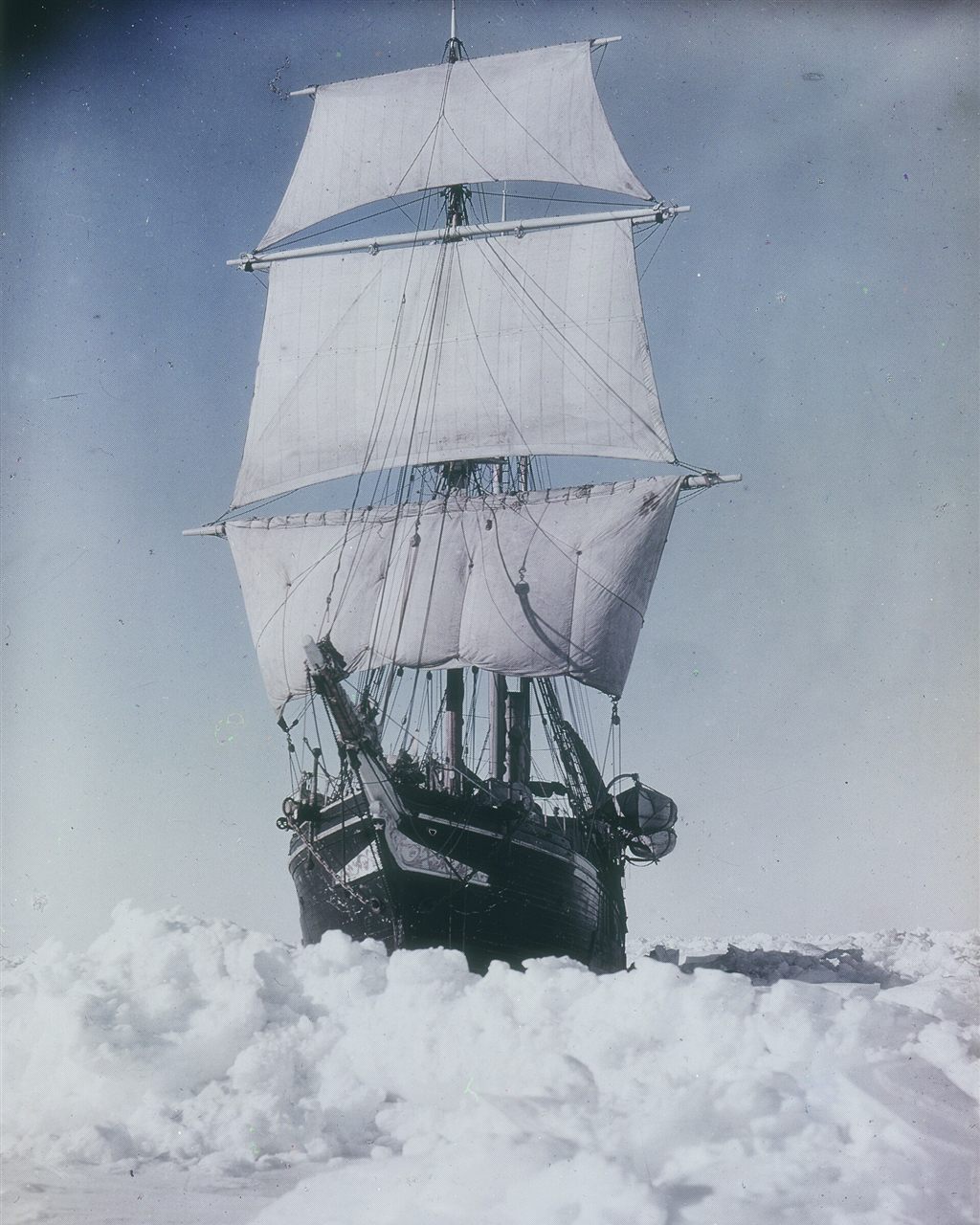
The photograph at the top of this page was taken in 1915, on Ernest Shackleton’s expedition to Antarctica. The ice trapped the ship and later crushed it, and the goal of the expedition was gone. Shackleton gave himself a new goal: bring every man home. It took months on the drifting ice, a voyage in small open boats, and a rescue that did not come until August 1916. Every one of them survived. Nobody remembers that expedition for the crossing it never made. People remember it because of a leader who kept his team together after the plan had failed.
Build people who can lead without you
As a core member of the Aero Modelling Club, I taught first-year students drone basics, OpenCV and simulation tools, and helped them through their first builds. Teaching is where I understood that a leader’s real work is to make themselves less necessary. A good build lasts a season. A student who can teach the next batch keeps the club alive long after you have left.
The final test of a leader is that he leaves behind him in other men the conviction and the will to carry on.
This matters even more in a company. A founder who has to approve every decision has built a queue, not a team. A true leader should be building people who can make those decisions without them, and then trusting them to make them.
Believe in the work, and stay whole
Enthusiasm spreads, and so does the lack of it. If I do not believe in what we are building, nobody on the team will, whatever I say. But enthusiasm is not noise. It is believing in the work so plainly that other people can see it in how you spend your time.
Hard work and balance are not opposites. I work long hours and I am proud of that. But I have learned that a tired leader makes careless decisions and has short-tempered conversations. Sleep, family, friends and time away from the screen are not a break from the job. They are part of doing it well.
What I think a true leader should be
Put together, this is the leader I believe people choose to follow, and the one I am trying to be:
- The first to do the hard work, and the last to take the credit.
- A listener before a talker.
- Quick to admit their own mistakes, and slow to criticise others.
- The one who takes the blame in public and gives the credit by name.
- Steady when the plan fails.
- Someone who sees the person, not only the task.
- Someone who is building people who can lead without them.
None of this needs a title, a degree or a particular kind of personality. It needs practice, every day, in small things. I do not do all of it well yet. I have written it down so that I can check myself against it, and so that anyone who works with me can hold me to it.
A title tells people who is in charge.
Only the way you lead tells them whether to follow.
P.S. This article is inspired by The Leader in You by Dale Carnegie. The quoted passages are from that book.